


There Is No Such Thing as “Just an Oil”: A not-too-complicated introduction to facial oils and how to figure out what your skin actually needs.


I grew up in the skincare era when oil was basically the enemy.
If your face was shiny, remove the oil.
If you had a breakout, remove more oil.
We had those astringent pads that felt like they were quite literally burning your face off, which obviously meant they were working, right?
We had the scrubs. You know the ones. Basically extra-grit sandpaper.
And cleansers that left your face feeling approximately three sizes too small.
Somehow “oil-free” became synonymous with healthy skin.
Then, somewhere along the way, the pendulum swung completely in the other direction.
Suddenly facial oils were everywhere.
Rosehip!
Argan!
Marula!
Jojoba
Sea buckthorn!
Put oil on everything!
Which created a completely different problem:
How on earth are you supposed to know which one your skin actually wants?
And this is where things get interesting.
Because there really is no such thing as “just an oil.”
“Oil” is a category, not an ingredient
Saying that oil is good or bad for your skin is a little like saying:
“Food is good for you.”
Okay.
Which food?
Sunflower oil, rosehip oil, argan oil, hemp seed oil, avocado oil, jojoba, evening primrose oil, coconut oil... they may all get lumped together under the word oil, but they can be chemically very different.
And those differences matter.
They influence how rich an oil feels, how quickly it absorbs, how stable it is, how easily it oxidizes, and ultimately how useful I find it in a particular formula.
Now, before your eyes glaze over...
You do not need to become a lipid chemist to use a facial oil.
That's my job.
I have spent a truly unreasonable amount of time reading fatty acid profiles and oxidation data.
Normal hobbies were apparently unavailable to me.
There is chemistry underneath all of this

Most plant oils are made largely from triglycerides, which are basically small structures made from glycerol with three fatty acids attached.
Those fatty acids vary from oil to oil.
You may (or not) have heard names like oleic acid, linoleic acid, palmitic acid, or alpha-linolenic acid. Each oil has its own mix and proportions.
That fatty acid profile helps explain why one oil can feel light and silky while another feels heavy, why some oils oxidize more quickly, and why I might choose very different oils for different formulas.
We'll get into those fatty acids more later, especially when we talk about dry skin versus oily or acne-prone skin.
But not today.
Nobody came here to take an exam.
For now, the important part is simply this:
Different oils have different chemistry, and that chemistry gives them different properties.
So... which oil is best?
Here comes my favorite deeply unsatisfying answer:
It depends.
Because the “best” oil isn't just about the oil.
It depends on your skin.
Dry skin may appreciate something very different from oily or acne-prone skin.
Sensitive skin may need a much simpler approach.
Skin that has become drier with age or hormonal changes may suddenly love an oil that would have felt far too rich ten years ago.
And dehydrated skin presents another issue entirely, because dehydration means a lack of water, not necessarily a lack of oil.
That last distinction is important enough that we'll come back to it.
Please don't start Googling fatty acid charts
This is the part where I don't want you to get overwhelmed.
You do not need to stand in your bathroom comparing oleic-to-linoleic acid ratios before you're allowed to moisturize your face.
Fatty acid composition is useful information.
It is not the whole story.
How an oil feels and performs also depends on the rest of the formula, how much you use, what else you apply, your climate, the season, your skin, and what you're trying to accomplish.
This is one reason I usually prefer formulating blends rather than deciding that one particular oil is the answer to everything.
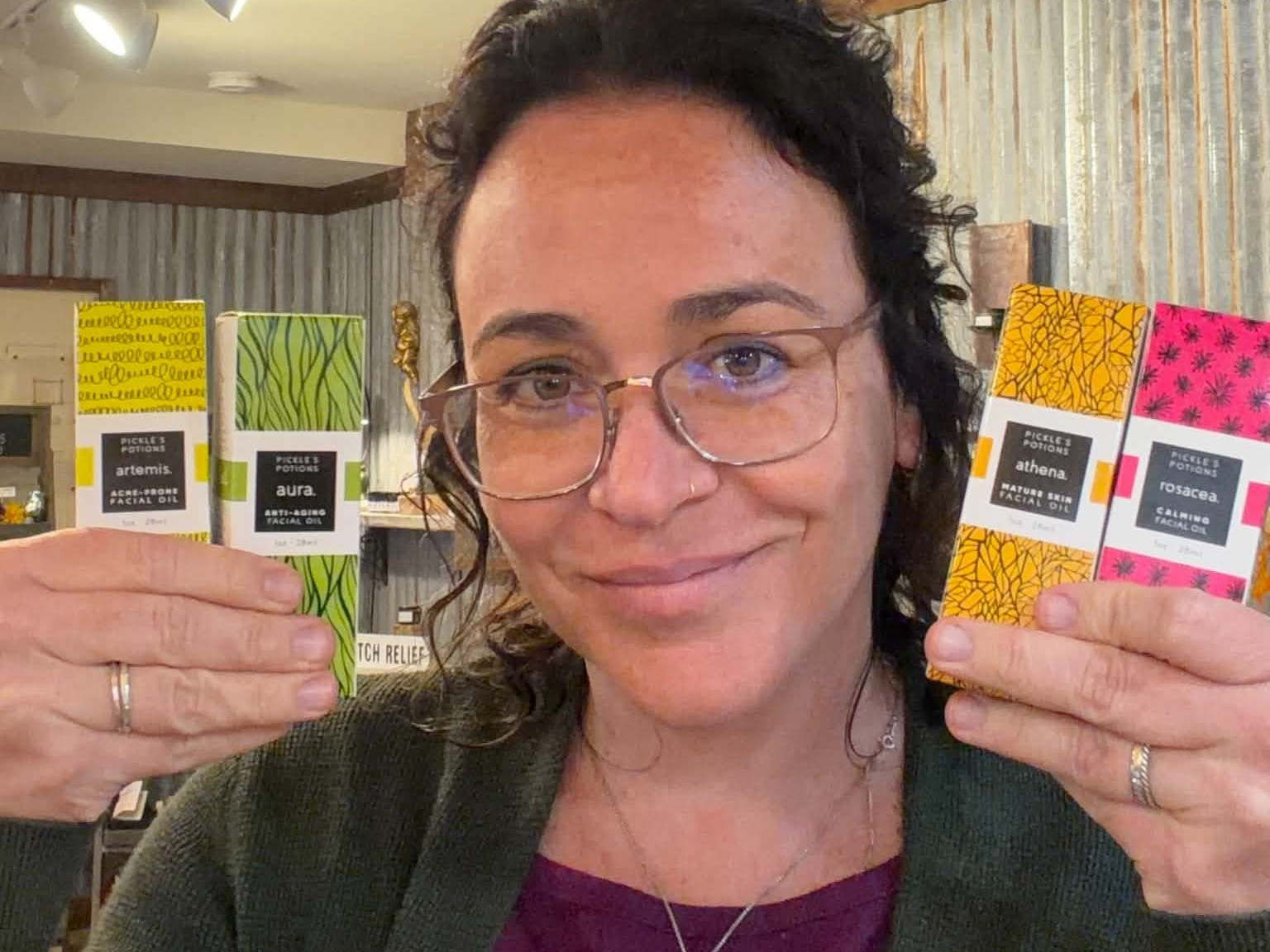
Our Aura Daily Oil, for example, combines several botanical oils rather than relying on one trendy “hero” ingredient.
Each contributes something a little different.
The point isn't to stuff as many exotic oils as possible into one bottle.
The point is to make the whole formula make sense.
And no, oily skin is not automatically banned from facial oil
This is another place where skincare advice tends to become far too absolute.
Dry skin needs oil.
Oily skin should never touch oil.
Coconut oil clogs everyone's pores.
Jojoba fixes acne.
Skin does not particularly care for our tidy little rules.
Some people with oily skin love certain facial oils.
Some don't.
Some acne-prone skin tolerates particular oils beautifully.
Other skin absolutely does not.
And that is exactly why I don't want to give you one enormous list of “good oils” and “bad oils.”
It is more useful to understand what your skin is doing and what you're trying to help it do.
So I'm going to break this down
Instead of cramming everything I know about carrier oils into one giant blog and making everyone regret clicking on it, we're going to make this a series.
We're going to talk about oils for:
Dry and dehydrated skin
Oily and acne-prone skin
Sensitive and reactive skin
Mature and hormonally changing skin
Along the way, we'll cover fatty acids, oxidation, comedogenic ratings, oil cleansing, coconut oil, rosehip, and some skincare claims that have gotten a little... enthusiastic.
I have opinions.
Especially about the internet telling people that raspberry seed oil is sunscreen.
We'll get there.
Oils are complicated. Choosing one doesn't have to be.
There is a lot of chemistry hiding inside those little bottles.
I happen to love that part.
But you don't need to memorize it.
What matters most is understanding your skin, what it needs, and what you're actually trying to accomplish.
The chemistry just helps us make better choices.
I'll handle the nerdy part.
You just bring the skin.




Comments