


Winter Through the Glass: How Nature Can Lift Your Mood During the Winter Blues

What research reveals about fractals, forest bathing, and emotional well-being

Ever wonder why being in nature makes you feel better?
I have spent years studying botanicals and working with herbs and flowers in our lab. I understand their chemistry and how carefully prepared plants can nourish skin and body. But one winter afternoon, while I was working and thinking about our summer garden, I felt a sudden lift in my mood just from picturing harvesting leaves and blossoms. It made me pause. For a moment I could almost smell calendula and warm soil, and I caught myself smiling at a memory in the middle of a workday. It felt slightly ridiculous and completely welcome.

My formal studies had taught me what happens when plants are touched, extracted, and applied. But I had never seriously asked what happens when we simply look at nature. Why did remembering the garden make me feel calmer? And why do I miss it so intensely during a Maine winter, when the landscape feels distant and difficult to access?
That question sent me down a bit of a rabbit hole…
The Lab Moment That Sparked a Question
Winter and I have a complicated relationship. I grew up in the Philippines, and even after years in Maine I still do not move through winter like a native. I watch skidoos buzz across the frozen lake and admire those in the ice fishing shacks from our window. Meanwhile I am inching across our treacherous driveway like a cautious penguin, thinking about shoveling and the stinging cold air entering my nostrils.
Like many people in northern climates, I am aware of seasonal dips in mood that echo what clinicians call Seasonal Affective Disorder (SAD). Reduced daylight and limited outdoor time can quietly wear on emotional well-being. By midwinter it’s easy to slide into habits like doom-scrolling on a gray afternoon, feeling oddly restless and drained at the same time.
Standing in the lab that day, missing our garden, I wondered if part of what I was missing was not just warmth or greenery, but a deeper neurological relationship with nature itself.

What My Research Uncovered About Nature and the Brain
What I found was not a single theory, but several overlapping strands of research that all point in the same direction. Nature does not just feel nice. It measurably changes how our brains and bodies function.
Stress recovery and the body
In the 1980s, Roger Ulrich demonstrated that even brief views of natural scenes can reduce physiological stress markers. Participants exposed to nature imagery showed faster recovery from stress, including changes in heart rate and skin conductance (a measure of how the skin’s electrical activity shifts with emotional arousal). In simple terms, their nervous systems calmed down more quickly.
Attention restoration and mental fatigue
Around the same time, Rachel Kaplan and Stephen Kaplan developed Attention Restoration
Theory. They proposed that natural environments help replenish directed attention (the mental effort we use to focus on tasks).
Nature engages what they called soft fascination (a gentle form of attention that holds our interest without demanding effort). This allows the brain’s executive systems to rest. The result is improved focus and less rumination (repetitive negative thinking that often accompanies low mood).
Forest bathing and full body effects
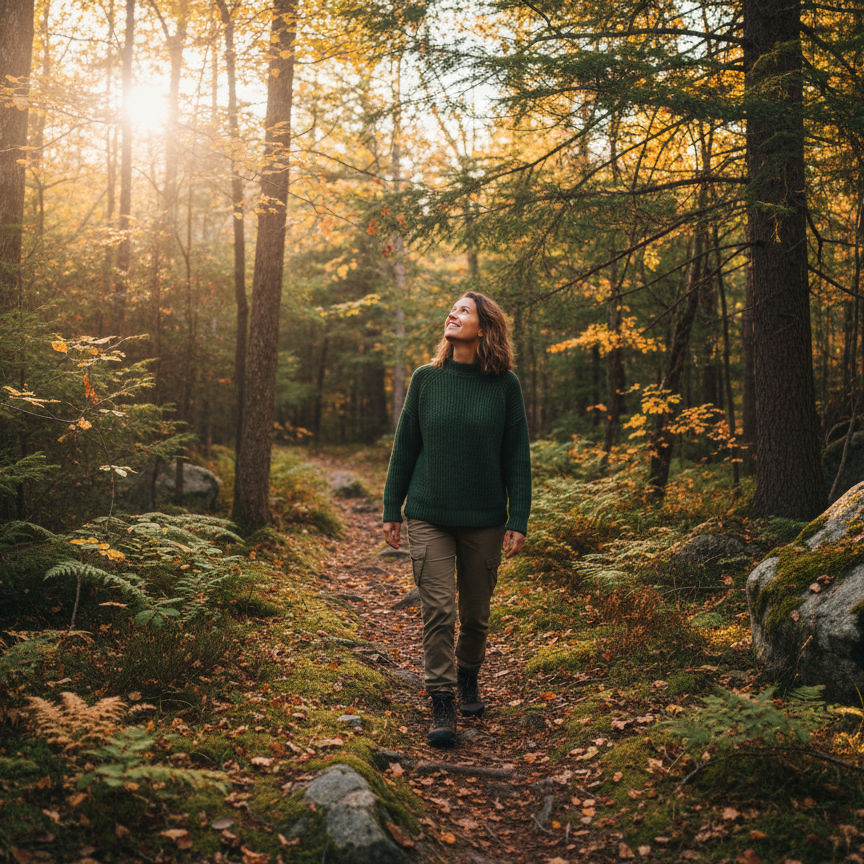
A third line of research comes from forest medicine. Studies of (the beautifully named) shinrin yoku, or forest bathing, led by researchers such as Qing Li, show that immersive time in wooded environments lowers cortisol, improves mood, and even enhances certain immune functions.
These findings suggest that nature exposure is a full body physiological experience. Sight, sound, scent, and texture all contribute to measurable shifts in the stress response.
Fractals as a visual mechanism
Within this broader context sits a more niche, specific field of research, that I was particularly fascinated by - the role of fractal patterns.
What Are Fractals and Why Do They Matter?
Fractals are repeating patterns that appear similar at different scales. They are common in nature, from branching trees and leaf veins to coastlines and clouds. Many natural fractals fall into what researchers call a mid range complexity (a level of visual detail that seems especially comfortable for the human visual system).

Work by scientists including Richard Taylor suggests that viewing mid range fractal patterns can significantly reduce stress in laboratory settings. Participants exposed to these patterns show calmer physiological responses and report greater visual preference.

One hypothesis is that the brain evolved to efficiently process the statistical structure of natural scenes. When we look at fractals, the visual system operates more fluently and with less effort. That ease may translate into reduced stress and improved mood.
Fractals are not a competing explanation to the broader nature research. They are a possible mechanism within it. Forests, gardens, and landscapes are rich in fractal geometry. The same environments that restore attention and lower cortisol are also visually structured in ways our brains appear tuned to recognize.
Winter, SAD, and Finding Nature Where We Are
For those of us navigating winter in northern regions, these findings feel especially relevant. Seasonal Affective Disorder is linked to reduced daylight and changes in circadian rhythms, but the research on nature suggests another layer. Winter often reduces our exposure to the kinds of environments that support emotional regulation.
If I am honest, I still do not relish long treks in icy wind. But understanding the science has shifted how I think about winter. Nature is not absent. It is transformed. And even partial or indirect exposure can engage the same restorative systems we enjoy freely in warmer seasons.
Here are three simple practices to reconnect with winter fractals and support mood:
1. A brief bundled walk or star gaze

Even a short, intentional step outside can evoke what psychologists call a sense of small self (the feeling of being part of something larger). Looking at bare tree branches against the sky or standing under winter stars exposes the eye to natural fractal structures and expansive scenes. I bundle up, step out for a few quiet minutes, and let my attention settle on patterns rather than discomfort.
2. Watching nature through the window

On colder days, I leave my phone in another room, sit by the window with tea and watch the shifting geometry of snow on branches, drifting clouds, or wind across the lake. This gentle observation engages soft fascination and gives my attention a place to rest. It interrupts rumination without requiring me to brave the elements. Perfect.
3. Observing the wood stove

Fire is a classic example of a dynamic fractal. The flickering flames create endlessly repeating, self similar patterns. Sitting by the wood stove and watching the movement of light is both warming and neurologically soothing. I mean to glance at it for a second and somehow end up hypnotized, like a snake charmed by a flute. It’s a brief, cozy escape from a gray winter’s day, and always manages to make me feel a little lighter.
Coming Back to the Garden
That afternoon in the lab, when my thoughts drifted to our garden, I was not just indulging nostalgia. I was touching a real relationship between my nervous system and the natural world.
Winter still challenges me. I still admire the hardiness of true winter enthusiasts from the comfort of indoors, usually burrito-wrapped in blankets. But I now see that well-being in winter is less about forcing myself into an idealized version of outdoor life and more about learning to recognize the forms of nature that are already present.
Through glass, through flame, or through a brief step into cold air, those fractal patterns continue to speak to the brain in a language it understands. Schedule time for them.
If you found this exploration helpful, you may enjoy my next post on the mood lifting benefits of aromatherapy, where I will look at how scent adds another dimension to our relationship with plants and emotional health.
References
Ulrich, R. S. (1981). Natural versus urban scenes: Some psychophysiological effects.
Kaplan, R., & Kaplan, S. (1989). The Experience of Nature: A Psychological Perspective.
Li, Q. (2010). Effect of forest bathing trips on human immune function.
Taylor, R. P. (2006). Reduction of physiological stress using fractal art and architecture.



Comments